Thursday, 21 January 2016

The Showroom

The arts organisation I have chosen to look at for section D of Unit 1 of the Arts Award is The Showroom. The Showroom is an independent cinema in Sheffield city center, which not only shows both mainstream and independent films, but also runs many film clubs and other special sessions. It is also attached to the Workstation, described on its website as "Sheffield's leading business centre for Creative and Digital Industries."

The BFI Film Academy which I went to took place in The Showroom, and is just one example of one of the many film events they host here. It is also the reason why I have been to The Showroom so much recently, and have been able to learn more about the cinema as well as the opportunities and events it provides. One of these opportunities are the many film clubs, which are:

  • Young Cinema - a Saturday film club for children and families which shows both new and classic releases, as well as before the film providing activities such as creating characters and making music for silent films. 
  • Early Doors - a film club on Thursday mornings for people over 55, showing new releases with coffee and cake. Each film is also presented with an introduction.
  • Kino Bambino! - a Monday morning screening of new releases for parents with babies less than a year old. The screenings have lower sound levels and a comfortable atmosphere, as well as complimentary hot drink afterwards.
  • KicStart - A film club held every month for children with autism and their families. It's described as a low sensory experience, the film not needing subtitles and with reduced sound, the house lights on low and people welcome to move about. It also has a quiet room available during the duration of the film. 
  • Film Studies - a programme every Wednesday with film screenings and discussions led by Film lecturers from Sheffield Hallam University. A new topic of studies is picked per term, a term lasting eight weeks. The current term of film studies is: 'Ridley Scott: Back Down to Earth with the Boy from South Shields'.
The Showroom also has a Stage on Screen programme, where they show live and pre-recorded theatre, ballet and opera, regular film quiz nights, as well as film seasons, such as the upcoming LGBT History Month screenings and hosting the Japan Foundation Touring Film Programme 2016.

The Showroom also has several loyalty and membership schemes. Their main one is a standard membership, where you get £1 discount on each film you see, as well as collecting 10 points for each pound you spend, collect enough points and you can get a free cinema ticket. Another new scheme is 'My Showroom', a free loyalty scheme where you collect points for each purchase you make. A scheme I have found out about and will get involved with is their InterActive scheme, a free membership for 15 - 18 year olds where you can get tickets for £4.50 across The Showroom's entire programme of films, as well as the scheme hosting some special screenings for InterActive members, the next one of these an "uniquely immersive cinema event" with a quiz, free coffee and doughnuts and a live band all before a screening of 'Groundhog Day'.

Another thing I found out about whilst spending time at The Showroom is their involvement with the documentary film festival, Doc/Fest. This is an annual festival that takes place in Sheffield, and is one of the worlds leading and the UK's premiere documentary film festival. The festival also has many opportunities for people wanting to work in the world of film, as any filmmaker can submit their documentary to the festival, the website saying that Doc/Fest is "dedicated to new talent and voices". Anyone can also submit ideas for sessions, and apply for the 'Meetmarket', a marketplace full of executives, distributors, commissioners, funders, advisers and buyers, creating an amazing opportunity for film makers to pitch their ideas and network.

For me, personally, I will be looking into participating in the Youth Jury, and also looking at volunteering opportunities. The Youth Jury is a free programme which allows five young people aged 18 - 22 access to industry insiders both in London and in the festival, and gives the successful applicants way into seeing how the documentary industry works, as well as providing many more opportunities. At the end of Doc/Fest, the Youth Jury also picks their own winning film, and award it a prize. This to me sounds like an amazing opportunity, and something I'd like to be a part of. I would also like to look into volunteering, as the Youth Jury is hard to get into, and gain some experience being part of a film festival.

The Showroom is a fantastic arts organisation, as it is much more than just a cinema, and I look forward to taking advantage of the opportunities it offers.

Thursday, 14 January 2016

My Edit - The Finished Products

Here are my two finished edits:


I like the way the first one turned out. I think I successfully created a sinister atmosphere, giving the intended meaning of this scene. If I were to do this again, when filming I would try and get shots with less people at the start, to introduce the idea of this character being isolated. I would also film at a different time of day, as the white sky doesn't help as most of the footage looks bright and white, which makes the scene seem less sinister as it is taking place in broad daylight. However, I am happy with the edit I created with what I had. If I had more time, I would also make more cuts towards the end, to build up tension even more, especially right at the end of the scene.


I'm also happy with how the second edit turned out. I think for what footage I had, I did well with. If I was going to film it again, I would shoot some longer, still shots as it was hard to edit the film to focus on the setting when the camera was moving because of me walking. The times I did stand still to film, I moved on too quickly, meaning some of my shots in this edit are too short to exactly fit to the music, making it flow less. The sort of scene I filmed here is mainly establishing shots, and is something that would be used at the start of the film to establish the time period and location. This means that there isn't much emotional reaction that can be had by an audience by this scene, especially as there are no present characters. Next time, I would introduce a character and show their reaction to this place in order to gain a greater response from an audience.

My Edit - The Editing Process

I first did the horror edit. To create meaning in this edit, I:
  • I chose a piece of music called 'measured paces' by Kevin MacLeod. This music matches with my intentions for the meaning as it is simplistic yet sinister, the simple piano chords adding to the footage instead of distracting from it.
  • I edited my clips to the music, making the edit on a beat. I did this to make the music and the footage flow better as one, and seem less jarring. 
  • I chose to include shots which seemed more enclosed and less open, to create a sense of claustrophobia, and give the idea that there is no escape.
  • As the clip goes on, I make the shots shorter, speeding up the cuts. This was to disorientate the audience, and the footage moves from one place to the next, adding confusion and making the audience unsure of their surroundings in this first person view of the graveyard.
  • I chose the faster moving shots where I am walking at a faster pace, which I intended to make it look like I was being chased, increasing the sense of threat when I get to the mysterious and closed off mausoleum at the end of the scene.
  • I included the shots of my shoes to introduce a character to the audience, and as it is a a character in this situation, this builds tension as the audience sympathises and fears for the character.
  • I also used filters to change the colour temperature to make them more cold, and also changed the brightness to make the shots darker. This is because I filmed in the day, and the shots were bright and full of warmer colours, which doesn't create fear. The colder colours make the audience more wary and feel less comfortable, changing the brightness to make the shots darker makes the setting more sinister, as it is dark and creates a greater fear in the audience of the unknown.
Editing the sinister and creepy scene
My second edit was more of the landscape, and I intended for it to be sad, atmospheric and have a feeling of melancholy.

  • When editing, I made cuts longer, and chose shots with less movement.
  • The music I used was "Pepper's Theme", also by Kevin MacLeod. This piano music is a lot slower and sadder, and like the last edit I cut on the piano notes to make the cuts less jarring and flow with the music.
  • I used shots of more open space to make the focus on the large landscapes, and decrease any claustrophobia to make the edit more relaxing to watch.
  • I didn't include any shots of me or my feet walking as in the previous edit to make the focus of the scene the surroundings and eliminate any tension created by the presence of a character.
  • Whilst I still had shots from the graveyard, I edited them to use the parts of the shot that focused more on the forest surroundings than the graves themselves.
  • I didn't use any effects or filters, as I filmed the footage around sunset, making the lighting warm and the sky full of colour, adding to my film as it makes the settings more beautiful and relaxing to watch, building the atmosphere.
  • I also used more cuts of streets and busy places to reduce the feeling of solitude, making the film more melancholy as the camera is alone in these busy places rather than a character in an isolating place.
  • I also edited a journey of going into the cemetery and then leaving it, reducing tension as the camera leaves a place that could possibly be threatening to go back to society at the end, making the audience less tense about what could happen next.
  • Editing the melancholy scene which focused on landscape and setting
     

Tuesday, 12 January 2016

Leadership - Evaluation and Reflection

After finishing our short film and getting the chance to see it on the big screen last Saturday, I can say that overall I am very happy about our finished product.
I think everyone in our group worked together when making the film, and on the day of the shoot we were very efficient and worked well as a team. We all helped each other in making the film as good as it could be, everyone making suggestions on how to film at some point in the day, and all of us working together to manage our actors.

On the day of the edit, I as the editor had a stressful day but a rewarding one. I was helped by the producer of the film in the process, who had talked to the rest of our crew so I could create an edit we were all happy with. When showing the finished film to our group, their positive reactions to the editing was encouraging, and I'm glad that I could put together our footage into a film we were all happy with.

Over making the film I have definitely developed and improved as an editor, as not only have I physically edited a film, but during the shoot I did jobs I didn't know an editor would have, such as making a log of each shot. I also improved my leadership skills through my eagerness to get all of the footage we would need for the edit to be successful, as I knew that we couldn't fix everything in the edit.

Feedback from my group:

"Isy really helped in the planning and organisation prior to the shoot, ensuring we had everything we needed. This thoroughness helped when it came to editing." - Amelia, the producer.

"Isy was always really organised, and knew what to do in the edit, as I'm really pleased with how the script looked on the screen." - Kirstie, who wrote the screenplay

"To say she wasn't an experienced editor, I think the edit for our film is what we all wanted it to be, so I was impressed." - Andy, the director

Overall, I am very happy in the way I have developed as an editor, and I'm also pleased with how we worked as a team to overcome challenges during the shoot and the edit.

Star Wars: The Force Awakens

This weekend, I finally saw 'Star Wars: The Force Awakens'. I'm familiar with the Star Wars franchise, like most people, as I saw some of the films and played the video games when I was younger. Over the Christmas holidays, I had a marathon of all six films, as I had never seen every film before all the way through and in the release order, starting with the original trilogy. After familiarising myself with the lore of the series, I thought it was finally time to see the newest installment.

I went with my friend, who is a big fan of the original Star Wars trilogy and who had already seen the film. His verdict was that it was good, but not as good as what he'd heard it was, as the film has been highly acclaimed by many Star Wars fans, unlike the prequel trilogy that came out around fifteen years ago. Although the film has been out for almost a month now, the cinema was still relatively full, which created an excited atmosphere and built my anticipation for the film.

The film itself is about Finn, an ex-Stormtrooper who after his first battle decides to run away, and Rey, a scavenger from an sparse planet. They're brought together by BB8, a droid that holds an important map for the resistance, a team fighting against the First Order, a surfaced version of the Dark Side lead by Kylo Ren and General Hux. In their adventures they are joined by rebellion fighter pilot Poe, as well as characters from the original trilogy such as Han Solo, Chewbacca and Princess (now General) Leia.

I loved this film. I thought it was one of the most charming and enjoyable blockbusters I've seen for a long time, as well as including all the things about Star Wars that made it great. The audience also seemed to enjoy it, laughing at the jokes and quips between characters, and I heard a cheer when Han Solo's ship, the Millennium Falcon, is first seen. When I came out of the cinema, my friend said that their opinion of the film had gotten better seeing it a second time, as first he expected a different film, but now he knew what was going to happen he'd found a new appreciation for it. As I had heard spoilers on social media about the film, I wasn't as suprised about some of the plot points, but I don't think this changed my enjoyment of the film.

Overall, I really enjoyed seeing 'Star Wars: The Force Awakens', and it has stuck in my mind for the past few days, as well as making a bit more of a true Star Wars fan out of me.


My Edit - Planning

For the final part of unit 1 part B of my Arts Award, I will be editing some footage I have shot in two different ways to create different meanings.

I have been around a graveyard and park close to where I live, and filmed myself walking around. I plan to edit this footage in two different ways: first, a creepy edit using techniques often used in horror films such as quick cuts and more ominous shots, and secondly, an atmospheric and almost sad view of the graveyard, using longer, sweeping shots.

I plan to use music in my two edits to further enhance the intended meaning and genre.


Sunday, 3 January 2016

Amy

Over the Christmas holidays, I also went to see another film at The Showroom cinema. As a part of their 'Best of 2015' showings, I went to see Asif Kapadia's 'Amy', a documentary about the singer Amy Winehouse. I had heard her music before, and knew a bit about her life and death due to the extensive media coverage, and so wanted to know more, especially because I knew the film had done very well both commercially and critically. I also knew there had been a negative response about the film from her family, and this made me more curious to see what the film was like.

The documentary follows the life of Amy Winehouse and her rise to fame, as well as her battles with substance addiction. The film starts with video footage of her at fourteen, singing happy birthday at a friends party, singing with a jazz orchestra at sixteen, and then doing her first gigs at eighteen. It follows the making of her first and second albums, and how a lot of the songs she wrote were true stories about her life, as well as her battles with bulimia and self harm, ultimately leading up to her death.

An interesting thing I thought about the film was the way the documentary was made. It is an observatory documentary, though at some points it starts to become a poetic documentary, the words of her songs appearing on the screen, more recent footage of places setting the scene for older stories and the fact that all the interviews are only audio - none of the interviews done exclusively for the film include any visual footage. I thought this method of documentary making was very effective, especially as the audio alone made so we only got her friends and families voices, and no body language or facial expressions, which could make the interviews more reliable, or possibly less as we don't have these things.

To me, although the documentary dealt with a tragic and upsetting story, it was never very sentimental. There was very little to emotionally manipulate the audience, which in a way made it more effective, as it wasn't setting out to make an audience cry, but to tell them a true story. Although portraying her father and ex husband negatively, Kapadia uses stories from her friends, family and doctors to do this, making this negative representation seem more reliable.

To me, 'Amy' was a very interesting documentary. After the film ended and the titles rolled, the whole of the audience sat in silence until the very end, and I was part of this, not quite knowing what to do or say. I went to go see it with my mother, who was also effected by it, one thing I remember her saying was that she couldn't quite believe her parents reactions to the mental illness and eating disorders she had during her childhood. I was glad I went to see it, and I would definitely recommend it, as both a portrayal of the effects of depression and substance dependency, but also as a representation of how the media can be toxic, and negatively effect people's lives in horrible ways.

It's a Wonderful Life

On the Monday 21st of December, four days before Christmas, I went to the Showroom Cinema in Sheffield to watch one of the special festive showings of the classic film, 'It's a Wonderful Life'. I had only seen the film twice before, but it is still one of my favourite holiday films, so I thought it would be good to go see it on the big screen.

The film is about George Bailey, a man who dreams of getting out of his hometown of Bedford Falls to go and travel the world, yet is always held back by his own willing to help the other people of the town. The first half of the film follows his life, until the point where he begins to contemplate suicide on Christmas Eve, where an angel named Clarence intervenes, and shows George how important he is to many people by taking him to a world where he was never born.

The film was named by the American Film Institute as being America's most inspiring film of the last 100 years in 2005, and it is easy to see why - the whole film is about how important compassion and kindness is, and ultimately if you are good to people, they will be good to you. The ending makes it one of my favourite films of all time, and it always makes me shed a few tears and leaves me feeling warm inside.

Although I do love the film, one of its problems is that is does take a while to get going. The first half of the film is mostly just context and setting the scene, telling George's story rather than actually advancing the plot we're introduced to at the start. Although this is necessary for the film's narrative in the second half of the film, it can seem long, especially considering the first time I watched it I only knew about the second half of the film, and thought that was the entire story, and so was confused when the introduction became more than I expected.

However, my first time seeing it on the big screen didn't disappoint. I saw it with my friend who had never seen the film before in an afternoon showing, which was full of people. The audience was of all ages, as the film has a universal certificate, and this helped build the atmosphere in the screening. Everyone laughed along, and even gave the film a round of applause at the end, something which I have never witnessed in a cinema screening, and happily joined in with.

Overall, my experience of watching 'It's a Wonderful Life' at the cinema was lovely, and cemented it's position in my heart as not only one of my favourite Christmas films but as one of my favourite films of all time. I will definitely be checking to see if The Showroom cinema put it on again next December.

Thursday, 17 December 2015

Edward Dmytryk's Rules of Editing

Edward Dmytryk was a film director who was famous for his film noirs in the 1940's. He directed 53 films in his career, as well as being nominated for several awards. After his career as a director, he taught and lectured about film and directing at a few universities in the USA, and wrote several books on filmmaking.

In one of his books,'On Film Editing', he outlines seven rules for editors;

1. Never make a cut without a positive reason
The next shot should do something to help further the narrative or influence the audience, better serving the purpose of the filmmakers intentions. A cut shouldn't be unrelated or unnecessary.

2. When undecided about what frame to cut on, cut long rather than short
This makes it easier to cut later if you change your mind. This rule would have been especially important when film was on tape which had to be cut to edit, as to make the shot longer again would have meant taping the tape back together.

3. Whenever possible, cut in motion
This is the idea of an action match - of a movement starting on one shot and after the cut, ending in another shot. This makes the action seem fluid and natural.

4. The 'fresh' is preferable to the 'stale'
This means that a cut should be made before it is left too long - it's better to show 'fresh' material than linger on something when the actor has left or finished what they were doing.

5. All scenes should begin and end with continuing action
Scenes should never start with the actors waiting to act - they should be in the middle of another action rather than waiting for the scene to start. This keeps audience interested, as well as the scene seeming more realistic.

6. Cut for proper values rather than proper matches
If a cut is dramatically correct and to the correct rhythm, a bad match can often go unnoticed by an audience.

7. Substance first, then form
Telling the story and provoking audience reaction should always be a higher priority than technique. The human situation and context has to be put first over a stylised edit.

Walter Murch's Rules of Editing

Walter Murch is an American sound designer and film editor, and worked with Francis Ford Coppola and George Lucas in the 1960's and 70's. As well as this, he is a leading author and educator on the topic of film editing, his book 'In the Blink of an Eye' described as a "manifesto for editors".

Although he encourages experimentation in editing, Murch says that there is essentially six categories to consider when editing, and he even provides a percentage to each category to what their value is to the edit as a whole. He says “An ideal cut (for me) [sic] is the one that satisfies the following six criteria at once.” That criteria is... 

1. Emotion (51%)
This is about what emotion you want the audience to feel. 
The audience's emotions and reactions should be of key focus to an editor - will each cut prompt the emotion from the audience that the director and the editors intend for that scene?
The high percentage marks the importance of emotion in the edit. A cut that prompts an emotional response from the audience should take precedence over a cut only meant to preserve the narrative's continuity.

2. Story (23%)
This is asking if the cut does anything to advance the narrative. 
In films, the narrative is the driving force of the film, so making sure each cut is dynamic and advances the story is vital.

3. Rhythm (10%)
This is asking if the cut occurs at the moment that is rhythmically right or interesting, and not jarring to the audience (unless of course this is the intention).
Often if the rhythm in the cut is right, the editing will look natural and the audience will almost be unaware of the edit.

4.  Eye Trace (7%)
This is about how the cut effects the audiences focus in the frame. 
A cut should not disorientate the viewer to the extent that their eyes cannot see the action in the next shot happening. Often actors can make this hard due to their movement in a shot.
If the focus of the next shot isn't radically different to the last before the cut, the cut will not be disorientating, again making the audience unaware of the edit.

5. Two Dimensional Plane of Screen (5%)
This rule refers to the 180 degree rule, and how each edit should follow the axis, the imaginary line that connects the two main focuses in the scene. When filming, the camera should only stay on one side of this axis, and in the edit, consecutive shots should also follow this rule.

6. Three Dimensional Space (4%)
This is about if the cut is true to the physical and spacial relationships within the diegesis (the world in which the film takes place). The cut should make sense in the setting of the scene. 

Murch emphasises that these rules aren't to be strictly followed, and should be used as guidelines when editing. Emotion and story are the top two priorities when editing, however the others often have to be used to achieve this - Murch likens them to “the bonds between the protons and neutrons in the nucleus of the atom.”The last two rules are also much more relevant to classical editing than some editing in film today, as they are much more about continuity and clarity and space, and are to be followed by editors wanting to edit a film where the edits feel truly invisible. Some editors break these rules to give a different effect to their edit, yet ultimately the edit needs to continue to shape the audiences reaction and emotions, and further the narrative. 

Friday, 4 December 2015

Suspence in Film

In our film, we use editing to cut the footage to the rhythm of a heartbeat in order to create suspense, as well as speed up the pace of our film with jump cuts in the opening. Many films use editing to create suspense in films. Here are some examples in films I have seen:

Jurassic Park (1993, dir. Steven Spielberg)
The scene with the Velociraptors in the kitchen is famous for being full of suspense. Editor Michael Kahn achieves this with slow, panning shots that don't cut away fast, allowing the audience to see the children in the same room as the dinosaurs. The short close up of the banging ladle allows for the audience to feel the same dread as the children do, as the focus is on that rather than their reactions. The shot of the velociraptors reacting to it before we cut back to the children also allows the audience to see something the children aren't, increasing our knowledge and making us aware of how much danger they are in. At the end of the scene, as Tim runs out the door, the cuts are faster, increasing the pace and tension.

Se7en (1995, dir. David Fincher)
The tension in the climax of 'Se7en' when Brad Pitts character Detective Mills finds out about his murdered wife is achieved through cross cutting. Although both the dialogue between Somerset and Mills and the simultaneous dialogue between Mills and John Doe occurs in the same location, Doe's dialogue becomes almost a monologue, and close up shots are used when cutting between Mills and Somerset's conversation where Somerset is trying to calm Mills down, and Doe's monologue. Editor Richard Francis-Bruce uses this cross cutting of the two simultaneous conversations as well as the soundscape which builds both in use of jarring music and also in volume are used to create tension in this scene.

Goodfellas (1990, dir. Martin Scorsese)
In the film there is a scene where Karen is told by Jimmy to pick up some dresses for him from "around the corner". The instruction is seemingly harmless, yet editing is used to create tension in this scene, and presume that Jimmy is perhaps planning something more sinister. The shot pans from Karen walking down the road to Jimmy by the door, emphasising that he isn't coming with her. A close up tracking shot is used to show Karen's uncertainty, especially as the shot lingers. A tracking shot of the wall by the street, presumably Karen's view also builds tension, as there is nothing there, yet the shot suggests that something may be soon.


Monday, 30 November 2015

Shoot Day and Post Production

Shoot day arrived last week and everything went smoothly - I had made a shot list with each shot we could do with and and without the extras, so shot the scenes with the protagonist first as we had the actor playing him all day, then after lunch we shot the footage with the extras in.


We did have a problem with the actor who agreed to play the part of the doctor - they dropped out last minute, but luckily one of the extras coming on the day agreed to fill the role, and our shoot continued without a hitch.

We managed to get all the shots we need, as when it came to editing the week after, we had lots of footage. In my role as the editor, I got my groups footage before the editing day the next Saturday, and went through it to order the shots, and to find which ones are best and the ones I would use during the edit.
On the day of the editing, my preparation before managed to save us time as we were able to get straight to cutting the shots, meaning the edit was less stressful. We were also fortunate enough for someone in our group to get into contact with a composer, so we were able to put some original music in which was actually made for our film.


We had some difficulty editing to the heart beat and the clock sound effects, as they had slightly different timings, so we decided that the opening should be edited to just the heartbeat, and inside the room should just be edited slightly to the beat as it was very hard to completely sync up.

Our film is now finished, but we haven't seen the finished film with the black and white effect we wanted to have, so I look forward to seeing it in its final format.

Monday, 23 November 2015

Graphic Match

This week I will look at the editing techniques we plan to use in our film, and how editors use these techniques to connote meanings.

Graphic match is a technique used in editing where one shot cuts to a shot with a similar image - a famous example being the match of the drain and the Marion Crane's eye in the shower scene in Alfred Hitchcock's 'Psycho', which was edited by George Tomasini. The shot of the drain and then the eye suggests ideas about the life leaving Crane, like the water down the drain, and her body becoming empty and lifeless.


This is an editing technique we will be using in our short film, so I want to familiarise myself with it's use by editors in film. It uses consecutive shots to covey meanings, taking ideas from Soviet Montage, a type of montage used where one shot being put next to another, often more emotive shot, can give the shots a different meaning altogether.
Another famous example is in Stanley Kubrick's '2001: A Space Odyssey', which was edited by Ray Lovejoy. An ape throws a bone into the air, which transitions into a shot of a space station, suggesting that man has evolved, and also connoting the change in the time setting.


Like most other editing techniques, graphic match is easy to spot in many films today when you know what you're looking for.
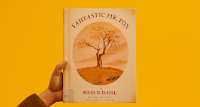
It can be seen clearly in Wes Anderson films, such as the opening of 'Fantastic Mr Fox' (edited by Andrew Weisblum, Ralph Foster and Stephen Perkins), to show that the viewer is 'entering' the storybook.


In our short film, we will graphic match the images of the clock to people in the waiting room's blank and expressionless faces, emphasising the protagonists nervousness as everyone around him seems to be almost machine like, as these graphic matches will juxtapose with the protagonist's face, which will be much more emotive, using ideas from Soviet Montage to create tension in our film. 


Tuesday, 17 November 2015

Being an Editor on Saturday

With my group scheduled to film on Saturday, the skill I want to develop in my role as editor is to be organised and focused, and to build my confidence in collaborating with others in order to make our film what we want it to be.
As I have filmed a short film before, I know a bit about the problems that can arise when filming, especially time constraints, so I want to make sure my group is always focused so we are able to get all the shots for the edit next week in the time we have.
The producer's role in the film is to manage the cast and crew of the project, so in a way the skill I want to develop links into this, but my focus will more be on obtaining the footage we want and need, and to make sure we continue with the same vision for our film, maintaining our aims of creating tension and creating a cliffhanger at the end of the film.
I look forward to filming on Saturday, and helping with the filmmaking before coming to edit next week.

Wednesday, 11 November 2015

Intro to Editing

Film editing is used in cinema for creation, manipulation and juxtaposition.
There are several types of editing which is used in cinema:

Continuity EditingEditing made to look almost 'invisible' as shots are linked together in a smooth, unobtrusive way to draw your attention away from the edit. This is the most common type of editing.
  • Action match - cut is made halfway through an action. We see the action start in one shot and then finished in another.
  • Eyeline match - when a character looks off screen, and the next shot matches the angle/direction they were looking from.
  • Establishing shots - scenes starting with a location shot.
Rules observed in continuity editing are:
  •  180 Degree rule - the camera can be placed anywhere on one side of the line between two subjects.
  • Shot reverse shot - one shot is followed by a reverse shot from the opposite side.
  • 30 Degree rule - the camera must always move at least 30 degrees between shots.
Discontinuity Editing - editing that deliberately breaks the rules if continuity editing to draw attention to the edit.
  • Jump cut - a jarring cut that jolts the viewer. Can be made to look like something is missing.
  • Non-diagetic insert - the film including a shot that doesn't belong in the world of the film.
  • Soviet montage - a type of intellectual montage pioneered by filmmakers such as Vsevolod Pudovkin. It is when two shots are placed together that have no obvious link, and the audience are forced to consider why they have been combined.
After identifying these types of editing, it becomes easy to spot them in films, and identify the effect on an audience.

Sunday, 8 November 2015

Challenge

The challenge I have set myself for the Arts Award is to learn more about editing and different styles of editing. I will be the editor of my groups short film, so I’d like to prepare myself more by developing my knowledge on editing.
To do this, first I will become familiar with editing techniques before our first editing workshop on 14th November, then I will start looking at films that use the editing techniques that we plan to use in our film, before finally starting to do a couple of edits myself before I edit my groups film on 28th November. After this I will carry on looking at editing, and developing the skills I have learnt.
I look forward to learning about a microelement of film I have not focused as much on before for my Arts Award.