On the Monday 21st of December, four days before Christmas, I went to the Showroom Cinema in Sheffield to watch one of the special festive showings of the classic film, 'It's a Wonderful Life'. I had only seen the film twice before, but it is still one of my favourite holiday films, so I thought it would be good to go see it on the big screen.
The film is about George Bailey, a man who dreams of getting out of his hometown of Bedford Falls to go and travel the world, yet is always held back by his own willing to help the other people of the town. The first half of the film follows his life, until the point where he begins to contemplate suicide on Christmas Eve, where an angel named Clarence intervenes, and shows George how important he is to many people by taking him to a world where he was never born.
The film was named by the American Film Institute as being America's most inspiring film of the last 100 years in 2005, and it is easy to see why - the whole film is about how important compassion and kindness is, and ultimately if you are good to people, they will be good to you. The ending makes it one of my favourite films of all time, and it always makes me shed a few tears and leaves me feeling warm inside.
Although I do love the film, one of its problems is that is does take a while to get going. The first half of the film is mostly just context and setting the scene, telling George's story rather than actually advancing the plot we're introduced to at the start. Although this is necessary for the film's narrative in the second half of the film, it can seem long, especially considering the first time I watched it I only knew about the second half of the film, and thought that was the entire story, and so was confused when the introduction became more than I expected.
However, my first time seeing it on the big screen didn't disappoint. I saw it with my friend who had never seen the film before in an afternoon showing, which was full of people. The audience was of all ages, as the film has a universal certificate, and this helped build the atmosphere in the screening. Everyone laughed along, and even gave the film a round of applause at the end, something which I have never witnessed in a cinema screening, and happily joined in with.
Overall, my experience of watching 'It's a Wonderful Life' at the cinema was lovely, and cemented it's position in my heart as not only one of my favourite Christmas films but as one of my favourite films of all time. I will definitely be checking to see if The Showroom cinema put it on again next December.
Sunday, 3 January 2016

Thursday, 17 December 2015
Edward Dmytryk's Rules of Editing
Edward Dmytryk was a film director who was famous for his film noirs in the 1940's. He directed 53 films in his career, as well as being nominated for several awards. After his career as a director, he taught and lectured about film and directing at a few universities in the USA, and wrote several books on filmmaking.
In one of his books,'On Film Editing', he outlines seven rules for editors;
1. Never make a cut without a positive reason
The next shot should do something to help further the narrative or influence the audience, better serving the purpose of the filmmakers intentions. A cut shouldn't be unrelated or unnecessary.
2. When undecided about what frame to cut on, cut long rather than short
This makes it easier to cut later if you change your mind. This rule would have been especially important when film was on tape which had to be cut to edit, as to make the shot longer again would have meant taping the tape back together.
3. Whenever possible, cut in motion
This is the idea of an action match - of a movement starting on one shot and after the cut, ending in another shot. This makes the action seem fluid and natural.
4. The 'fresh' is preferable to the 'stale'
This means that a cut should be made before it is left too long - it's better to show 'fresh' material than linger on something when the actor has left or finished what they were doing.
5. All scenes should begin and end with continuing action
Scenes should never start with the actors waiting to act - they should be in the middle of another action rather than waiting for the scene to start. This keeps audience interested, as well as the scene seeming more realistic.
6. Cut for proper values rather than proper matches
If a cut is dramatically correct and to the correct rhythm, a bad match can often go unnoticed by an audience.
7. Substance first, then form
Telling the story and provoking audience reaction should always be a higher priority than technique. The human situation and context has to be put first over a stylised edit.
In one of his books,'On Film Editing', he outlines seven rules for editors;
1. Never make a cut without a positive reason
The next shot should do something to help further the narrative or influence the audience, better serving the purpose of the filmmakers intentions. A cut shouldn't be unrelated or unnecessary.
2. When undecided about what frame to cut on, cut long rather than short
This makes it easier to cut later if you change your mind. This rule would have been especially important when film was on tape which had to be cut to edit, as to make the shot longer again would have meant taping the tape back together.
3. Whenever possible, cut in motion
This is the idea of an action match - of a movement starting on one shot and after the cut, ending in another shot. This makes the action seem fluid and natural.
4. The 'fresh' is preferable to the 'stale'
This means that a cut should be made before it is left too long - it's better to show 'fresh' material than linger on something when the actor has left or finished what they were doing.
5. All scenes should begin and end with continuing action
Scenes should never start with the actors waiting to act - they should be in the middle of another action rather than waiting for the scene to start. This keeps audience interested, as well as the scene seeming more realistic.
6. Cut for proper values rather than proper matches
If a cut is dramatically correct and to the correct rhythm, a bad match can often go unnoticed by an audience.
7. Substance first, then form
Telling the story and provoking audience reaction should always be a higher priority than technique. The human situation and context has to be put first over a stylised edit.
Walter Murch's Rules of Editing
Walter Murch is an American sound designer and film editor, and worked with Francis Ford Coppola and George Lucas in the 1960's and 70's. As well as this, he is a leading author and educator on the topic of film editing, his book 'In the Blink of an Eye' described as a "manifesto for editors".
Although he encourages experimentation in editing, Murch says that there is essentially six categories to consider when editing, and he even provides a percentage to each category to what their value is to the edit as a whole. He says “An ideal cut (for me) [sic] is the one that satisfies the following six criteria at once.” That criteria is...
Murch emphasises that these rules aren't to be strictly followed, and should be used as guidelines when editing. Emotion and story are the top two priorities when editing, however the others often have to be used to achieve this - Murch likens them to “the bonds between the protons and neutrons in the nucleus of the atom.”The last two rules are also much more relevant to classical editing than some editing in film today, as they are much more about continuity and clarity and space, and are to be followed by editors wanting to edit a film where the edits feel truly invisible. Some editors break these rules to give a different effect to their edit, yet ultimately the edit needs to continue to shape the audiences reaction and emotions, and further the narrative.
1. Emotion (51%)
This is about what emotion you want the audience to feel.
The audience's emotions and reactions should be of key focus to an editor - will each cut prompt the emotion from the audience that the director and the editors intend for that scene?
The high percentage marks the importance of emotion in the edit. A cut that prompts an emotional response from the audience should take precedence over a cut only meant to preserve the narrative's continuity.
2. Story (23%)
This is asking if the cut does anything to advance the narrative.
In films, the narrative is the driving force of the film, so making sure each cut is dynamic and advances the story is vital.
3. Rhythm (10%)
This is asking if the cut occurs at the moment that is rhythmically right or interesting, and not jarring to the audience (unless of course this is the intention).
Often if the rhythm in the cut is right, the editing will look natural and the audience will almost be unaware of the edit.
4. Eye Trace (7%)
This is about how the cut effects the audiences focus in the frame.
A cut should not disorientate the viewer to the extent that their eyes cannot see the action in the next shot happening. Often actors can make this hard due to their movement in a shot.
If the focus of the next shot isn't radically different to the last before the cut, the cut will not be disorientating, again making the audience unaware of the edit.
5. Two Dimensional Plane of Screen (5%)
This rule refers to the 180 degree rule, and how each edit should follow the axis, the imaginary line that connects the two main focuses in the scene. When filming, the camera should only stay on one side of this axis, and in the edit, consecutive shots should also follow this rule.
6. Three Dimensional Space (4%)
This is about if the cut is true to the physical and spacial relationships within the diegesis (the world in which the film takes place). The cut should make sense in the setting of the scene. Murch emphasises that these rules aren't to be strictly followed, and should be used as guidelines when editing. Emotion and story are the top two priorities when editing, however the others often have to be used to achieve this - Murch likens them to “the bonds between the protons and neutrons in the nucleus of the atom.”The last two rules are also much more relevant to classical editing than some editing in film today, as they are much more about continuity and clarity and space, and are to be followed by editors wanting to edit a film where the edits feel truly invisible. Some editors break these rules to give a different effect to their edit, yet ultimately the edit needs to continue to shape the audiences reaction and emotions, and further the narrative.
Friday, 4 December 2015
Suspence in Film
In our film, we use editing to cut the footage to the rhythm of a heartbeat in order to create suspense, as well as speed up the pace of our film with jump cuts in the opening. Many films use editing to create suspense in films. Here are some examples in films I have seen:
Jurassic Park (1993, dir. Steven Spielberg)
The scene with the Velociraptors in the kitchen is famous for being full of suspense. Editor Michael Kahn achieves this with slow, panning shots that don't cut away fast, allowing the audience to see the children in the same room as the dinosaurs. The short close up of the banging ladle allows for the audience to feel the same dread as the children do, as the focus is on that rather than their reactions. The shot of the velociraptors reacting to it before we cut back to the children also allows the audience to see something the children aren't, increasing our knowledge and making us aware of how much danger they are in. At the end of the scene, as Tim runs out the door, the cuts are faster, increasing the pace and tension.
Se7en (1995, dir. David Fincher)
The tension in the climax of 'Se7en' when Brad Pitts character Detective Mills finds out about his murdered wife is achieved through cross cutting. Although both the dialogue between Somerset and Mills and the simultaneous dialogue between Mills and John Doe occurs in the same location, Doe's dialogue becomes almost a monologue, and close up shots are used when cutting between Mills and Somerset's conversation where Somerset is trying to calm Mills down, and Doe's monologue. Editor Richard Francis-Bruce uses this cross cutting of the two simultaneous conversations as well as the soundscape which builds both in use of jarring music and also in volume are used to create tension in this scene.
Goodfellas (1990, dir. Martin Scorsese)
In the film there is a scene where Karen is told by Jimmy to pick up some dresses for him from "around the corner". The instruction is seemingly harmless, yet editing is used to create tension in this scene, and presume that Jimmy is perhaps planning something more sinister. The shot pans from Karen walking down the road to Jimmy by the door, emphasising that he isn't coming with her. A close up tracking shot is used to show Karen's uncertainty, especially as the shot lingers. A tracking shot of the wall by the street, presumably Karen's view also builds tension, as there is nothing there, yet the shot suggests that something may be soon.
Jurassic Park (1993, dir. Steven Spielberg)
The scene with the Velociraptors in the kitchen is famous for being full of suspense. Editor Michael Kahn achieves this with slow, panning shots that don't cut away fast, allowing the audience to see the children in the same room as the dinosaurs. The short close up of the banging ladle allows for the audience to feel the same dread as the children do, as the focus is on that rather than their reactions. The shot of the velociraptors reacting to it before we cut back to the children also allows the audience to see something the children aren't, increasing our knowledge and making us aware of how much danger they are in. At the end of the scene, as Tim runs out the door, the cuts are faster, increasing the pace and tension.
Se7en (1995, dir. David Fincher)
The tension in the climax of 'Se7en' when Brad Pitts character Detective Mills finds out about his murdered wife is achieved through cross cutting. Although both the dialogue between Somerset and Mills and the simultaneous dialogue between Mills and John Doe occurs in the same location, Doe's dialogue becomes almost a monologue, and close up shots are used when cutting between Mills and Somerset's conversation where Somerset is trying to calm Mills down, and Doe's monologue. Editor Richard Francis-Bruce uses this cross cutting of the two simultaneous conversations as well as the soundscape which builds both in use of jarring music and also in volume are used to create tension in this scene.
Goodfellas (1990, dir. Martin Scorsese)
In the film there is a scene where Karen is told by Jimmy to pick up some dresses for him from "around the corner". The instruction is seemingly harmless, yet editing is used to create tension in this scene, and presume that Jimmy is perhaps planning something more sinister. The shot pans from Karen walking down the road to Jimmy by the door, emphasising that he isn't coming with her. A close up tracking shot is used to show Karen's uncertainty, especially as the shot lingers. A tracking shot of the wall by the street, presumably Karen's view also builds tension, as there is nothing there, yet the shot suggests that something may be soon.
Monday, 30 November 2015
Shoot Day and Post Production
Shoot day arrived last week and everything went smoothly - I had made a shot list with each shot we could do with and and without the extras, so shot the scenes with the protagonist first as we had the actor playing him all day, then after lunch we shot the footage with the extras in.


We did have a problem with the actor who agreed to play the part of the doctor - they dropped out last minute, but luckily one of the extras coming on the day agreed to fill the role, and our shoot continued without a hitch.
We managed to get all the shots we need, as when it came to editing the week after, we had lots of footage. In my role as the editor, I got my groups footage before the editing day the next Saturday, and went through it to order the shots, and to find which ones are best and the ones I would use during the edit.
On the day of the editing, my preparation before managed to save us time as we were able to get straight to cutting the shots, meaning the edit was less stressful. We were also fortunate enough for someone in our group to get into contact with a composer, so we were able to put some original music in which was actually made for our film.

We had some difficulty editing to the heart beat and the clock sound effects, as they had slightly different timings, so we decided that the opening should be edited to just the heartbeat, and inside the room should just be edited slightly to the beat as it was very hard to completely sync up.
Our film is now finished, but we haven't seen the finished film with the black and white effect we wanted to have, so I look forward to seeing it in its final format.
We did have a problem with the actor who agreed to play the part of the doctor - they dropped out last minute, but luckily one of the extras coming on the day agreed to fill the role, and our shoot continued without a hitch.
We managed to get all the shots we need, as when it came to editing the week after, we had lots of footage. In my role as the editor, I got my groups footage before the editing day the next Saturday, and went through it to order the shots, and to find which ones are best and the ones I would use during the edit.
On the day of the editing, my preparation before managed to save us time as we were able to get straight to cutting the shots, meaning the edit was less stressful. We were also fortunate enough for someone in our group to get into contact with a composer, so we were able to put some original music in which was actually made for our film.
We had some difficulty editing to the heart beat and the clock sound effects, as they had slightly different timings, so we decided that the opening should be edited to just the heartbeat, and inside the room should just be edited slightly to the beat as it was very hard to completely sync up.
Our film is now finished, but we haven't seen the finished film with the black and white effect we wanted to have, so I look forward to seeing it in its final format.
Monday, 23 November 2015
Graphic Match
This week I will look at the editing techniques we plan to use in our film, and how editors use these techniques to connote meanings.
Graphic match is a technique used in editing where one shot cuts to a shot with a similar image - a famous example being the match of the drain and the Marion Crane's eye in the shower scene in Alfred Hitchcock's 'Psycho', which was edited by George Tomasini. The shot of the drain and then the eye suggests ideas about the life leaving Crane, like the water down the drain, and her body becoming empty and lifeless.


.png)

Graphic match is a technique used in editing where one shot cuts to a shot with a similar image - a famous example being the match of the drain and the Marion Crane's eye in the shower scene in Alfred Hitchcock's 'Psycho', which was edited by George Tomasini. The shot of the drain and then the eye suggests ideas about the life leaving Crane, like the water down the drain, and her body becoming empty and lifeless.
This is an editing technique we will be using in our short film, so I want to familiarise myself with it's use by editors in film. It uses consecutive shots to covey meanings, taking ideas from Soviet Montage, a type of montage used where one shot being put next to another, often more emotive shot, can give the shots a different meaning altogether.
Another famous example is in Stanley Kubrick's '2001: A Space Odyssey', which was edited by Ray Lovejoy. An ape throws a bone into the air, which transitions into a shot of a space station, suggesting that man has evolved, and also connoting the change in the time setting.
Like most other editing techniques, graphic match is easy to spot in many films today when you know what you're looking for.
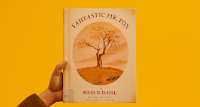
It can be seen clearly in Wes Anderson films, such as the opening of 'Fantastic Mr Fox' (edited by Andrew Weisblum, Ralph Foster and Stephen Perkins), to show that the viewer is 'entering' the storybook.
In our short film, we will graphic match the images of the clock to people in the waiting room's blank and expressionless faces, emphasising the protagonists nervousness as everyone around him seems to be almost machine like, as these graphic matches will juxtapose with the protagonist's face, which will be much more emotive, using ideas from Soviet Montage to create tension in our film.
Tuesday, 17 November 2015
Being an Editor on Saturday
With my group scheduled to film on Saturday, the skill I want to develop in my role as editor is to be organised and focused, and to build my confidence in collaborating with others in order to make our film what we want it to be.
As I have filmed a short film before, I know a bit about the problems that can arise when filming, especially time constraints, so I want to make sure my group is always focused so we are able to get all the shots for the edit next week in the time we have.
The producer's role in the film is to manage the cast and crew of the project, so in a way the skill I want to develop links into this, but my focus will more be on obtaining the footage we want and need, and to make sure we continue with the same vision for our film, maintaining our aims of creating tension and creating a cliffhanger at the end of the film.
I look forward to filming on Saturday, and helping with the filmmaking before coming to edit next week.
As I have filmed a short film before, I know a bit about the problems that can arise when filming, especially time constraints, so I want to make sure my group is always focused so we are able to get all the shots for the edit next week in the time we have.
The producer's role in the film is to manage the cast and crew of the project, so in a way the skill I want to develop links into this, but my focus will more be on obtaining the footage we want and need, and to make sure we continue with the same vision for our film, maintaining our aims of creating tension and creating a cliffhanger at the end of the film.
I look forward to filming on Saturday, and helping with the filmmaking before coming to edit next week.
Subscribe to:
Posts (Atom)